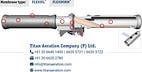
Exploring the Different Types of Diffuser in Aeration Tank

Aeration is one of the most critical processes in modern wastewater treatment systems. The efficiency of an aeration tank depends significantly on the type of diffuser used for oxygen transfer. Selecting the right diffuser not only improves treatment performance but also reduces energy consumption, operating costs, and maintenance requirements.
Different types of diffusers are designed to meet specific wastewater treatment needs. Whether used in Sewage Treatment Plants (STPs), Effluent Treatment Plants (ETPs), industrial wastewater systems, or municipal treatment facilities, the right diffuser ensures optimal oxygen distribution and biological treatment efficiency.
This comprehensive guide explores the different types of diffusers used in aeration tanks, their working principles, advantages, applications, and factors to consider when selecting the ideal aeration diffuser.
What Is a Diffuser in an Aeration Tank?
A diffuser in an aeration tank is a device that introduces compressed air into wastewater through thousands of tiny openings or pores. As the air passes through these openings, bubbles are created that transfer dissolved oxygen into the water.
The oxygen supplied by the diffuser supports aerobic microorganisms responsible for breaking down organic pollutants, ammonia, and other contaminants during biological treatment.
An efficient diffuser provides:
High oxygen transfer efficiency
Uniform air distribution
Reduced blower energy consumption
Improved biological activity
Consistent wastewater treatment performance
How Aeration Tank Diffusers Work
The aeration process begins when a blower forces compressed air through pipelines connected to diffusers installed at the bottom of the tank.
The diffuser releases bubbles that rise through the wastewater. During this upward movement:
Oxygen dissolves into the water.
Microorganisms consume the oxygen.
Organic matter decomposes.
Harmful pollutants are biologically treated.
Smaller bubbles remain suspended longer, increasing oxygen transfer and making the aeration process more efficient.
Major Types of Diffuser in Aeration Tank
Several diffuser designs are available, each offering unique benefits depending on the treatment application.
1. Fine Bubble Disc Diffuser
The fine bubble disc diffuser is among the most widely used aeration devices in wastewater treatment.
It consists of a circular membrane mounted over a plastic support disc. Air passes through laser-cut perforations, producing thousands of tiny bubbles.
Features
High oxygen transfer efficiency
EPDM or silicone membrane
Low operating cost
Excellent biological treatment performance
Uniform air distribution
Applications
Municipal STPs
Industrial ETPs
Food processing plants
Pharmaceutical industries
Textile wastewater treatment
Advantages
Significant energy savings
Minimal maintenance
Long service life
High mixing efficiency
2. Fine Bubble Tube Diffuser
Tube diffusers feature a cylindrical membrane stretched over a perforated support pipe.
Compared to disc diffusers, tube diffusers offer larger membrane surface area and higher airflow capacity.
Features
Long cylindrical design
Uniform bubble distribution
Easy installation
Excellent oxygen transfer
Applications
Large aeration tanks
Industrial wastewater treatment
Municipal sewage treatment
Continuous aeration systems
Advantages
High airflow capacity
Better clog resistance
Reduced pressure loss
Durable construction
3. Coarse Bubble Diffuser
Coarse bubble diffusers generate larger air bubbles than fine bubble systems.
Although oxygen transfer efficiency is lower, these diffusers provide excellent mixing and are less susceptible to clogging.
Features
Large bubble formation
High turbulence
Heavy-duty construction
Suitable for harsh wastewater
Applications
Equalization tanks
Grit chambers
Sludge holding tanks
Mixing applications
Industrial wastewater
Advantages
Excellent mixing
Low maintenance
High durability
Performs well with dirty wastewater
4. Panel Diffuser
Panel diffusers are rectangular aeration units designed for very large treatment tanks.
These diffusers cover a broader surface area than standard disc diffusers.
Features
Large membrane surface
High oxygen transfer
Uniform air coverage
Low pressure drop
Applications
Municipal treatment plants
Industrial process tanks
Large biological reactors
Advantages
Greater aeration coverage
Improved process efficiency
Lower operating costs
5. Ceramic Diffuser
Ceramic diffusers use porous ceramic materials instead of flexible membranes.
They are commonly selected for chemically aggressive environments.
Features
Rigid porous structure
Chemical resistance
Fine bubble production
Long operational life
Applications
Chemical industries
Mining wastewater
High-temperature wastewater
Specialized industrial applications
Advantages
Excellent corrosion resistance
Stable bubble size
Long-lasting performance
6. Silicon Membrane Diffuser
Silicone membrane diffusers are increasingly used where superior chemical resistance is required.
Compared to EPDM membranes, silicone offers enhanced resistance to oils, solvents, and high temperatures.
Advantages
Better chemical compatibility
Excellent flexibility
Long membrane life
Consistent oxygen transfer
Fine Bubble vs Coarse Bubble Diffusers
Feature
Fine Bubble Diffuser
Coarse Bubble Diffuser
Bubble Size
Small
Large
Oxygen Transfer
Very High
Moderate
Energy Efficiency
Excellent
Average
Mixing Ability
Moderate
Excellent
Maintenance
Low
Very Low
Best For
Biological Treatment
Mixing Applications
Materials Used in Aeration Tank Diffusers
Modern diffusers are manufactured using durable materials that withstand continuous operation.
EPDM Membrane
Most commonly used
Flexible
Cost-effective
Resistant to aging
Silicone Membrane
High chemical resistance
Suitable for industrial wastewater
Excellent elasticity
PTFE-Coated Membrane
Anti-fouling properties
Reduced clogging
Longer cleaning intervals
Ceramic Material
Rigid structure
High temperature resistance
Long operational life
Factors to Consider When Choosing a Diffuser
Selecting the correct diffuser depends on multiple engineering parameters.
Wastewater Characteristics
Industrial wastewater often contains chemicals, oils, grease, and suspended solids that influence diffuser selection.
Tank Depth
Deeper aeration tanks generally improve oxygen transfer because bubbles remain underwater longer.
Required Oxygen Transfer Rate
Different biological treatment processes demand different oxygen supply capacities.
Energy Consumption
Since aeration accounts for a large portion of plant energy usage, high-efficiency diffusers help reduce operating expenses.
Maintenance Requirements
Easy-to-clean diffusers reduce plant downtime and maintenance costs.
Airflow Capacity
Proper diffuser sizing ensures adequate oxygen delivery without excessive blower pressure.
Benefits of Using High-Quality Aeration Diffusers
Modern diffuser technology offers several operational benefits.
Higher Oxygen Transfer Efficiency
Efficient oxygen delivery improves microbial performance and wastewater treatment.
Lower Energy Costs
Reduced blower power significantly lowers electricity consumption.
Improved Treatment Performance
Consistent oxygen distribution enhances biological degradation of pollutants.
Reduced Maintenance
Quality membranes resist fouling and clogging for longer operational periods.
Long Equipment Life
Durable materials extend diffuser service life even in demanding environments.
Applications of Aeration Tank Diffusers
Diffusers are widely used across numerous industries.
Municipal Sewage Treatment Plants
Used for activated sludge processes and biological nutrient removal.
Industrial Effluent Treatment Plants
Treat wastewater from manufacturing facilities.
Food and Beverage Industry
Supports biological treatment of organic-rich wastewater.
Paper and Pulp Industry
Provides oxygen for biological oxidation.
Pharmaceutical Industry
Maintains aerobic treatment conditions.
Textile Industry
Removes dyes, chemicals, and organic pollutants.
Chemical Processing Plants
Facilitates efficient biological treatment before discharge.
Maintenance Tips for Aeration Tank Diffusers
Proper maintenance ensures consistent performance and extends equipment life.
Inspect membranes regularly for wear or damage.
Monitor blower pressure to detect clogging early.
Clean diffusers periodically to remove scaling and biofilm.
Replace worn membranes before oxygen transfer efficiency declines.
Check air distribution for uniform bubble formation.
Use clean compressed air to minimize fouling.
Schedule preventive maintenance to avoid unexpected downtime.
Latest Innovations in Aeration Diffuser Technology
Recent advancements have improved diffuser efficiency and reliability.
PTFE-Coated Membranes
These membranes resist fouling and reduce maintenance frequency.
Advanced EPDM Formulations
New membrane compounds improve flexibility and durability.
Energy-Efficient Designs
Modern diffuser geometries reduce blower pressure requirements while maximizing oxygen transfer.
Smart Aeration Systems
Integrated monitoring systems automatically adjust airflow based on oxygen demand, reducing operational costs.
How to Select the Best Diffuser for Your Aeration Tank
Choosing the most suitable diffuser requires evaluating:
Treatment process requirements
Tank dimensions
Airflow demand
Wastewater composition
Maintenance capabilities
Energy efficiency goals
Budget and lifecycle costs
For most municipal and industrial biological treatment systems, fine bubble disc diffusers and fine bubble tube diffusers provide the best balance of oxygen transfer efficiency, energy savings, and long-term reliability. Coarse bubble diffusers remain an excellent choice where intensive mixing and resistance to clogging are the primary priorities.
Conclusion
The type of diffuser used in an aeration tank directly influences wastewater treatment efficiency, energy consumption, and plant operating costs. Fine bubble disc diffusers, tube diffusers, coarse bubble diffusers, panel diffusers, ceramic diffusers, and silicone membrane diffusers each serve specific operational needs and treatment objectives.
By selecting the appropriate diffuser based on wastewater characteristics, tank design, airflow requirements, and maintenance considerations, treatment facilities can achieve superior oxygen transfer, improved biological performance, lower energy costs, and reliable long-term operation. Investing in high-quality aeration diffusers ultimately enhances the overall efficiency and sustainability of modern wastewater treatment systems.
Frequently Asked Questions (FAQs)
Which diffuser is best for an aeration tank?
Fine bubble disc diffusers are generally considered the best choice for biological wastewater treatment due to their high oxygen transfer efficiency and energy savings.
What is the difference between fine bubble and coarse bubble diffusers?
Fine bubble diffusers produce smaller bubbles for higher oxygen transfer efficiency, while coarse bubble diffusers create larger bubbles that provide superior mixing but lower oxygen transfer.
Which membrane material is commonly used in diffusers?
EPDM is the most widely used membrane material because it offers excellent durability, flexibility, and cost-effectiveness. Silicone and PTFE-coated membranes are preferred for more demanding industrial applications.
How often should aeration diffusers be maintained?
Routine inspections should be carried out regularly, with cleaning and membrane replacement scheduled based on operating conditions, wastewater characteristics, and manufacturer recommendations.
Can diffusers reduce energy consumption?
Yes. High-quality fine bubble diffusers can significantly reduce blower energy consumption by improving oxygen transfer efficiency, leading to substantial long-term operational savings.
Contact Titan Aeration today to learn more about high-performance fine bubble diffusers, EPDM membrane diffusers, and customized aeration solutions for STP, ETP, and industrial wastewater treatment plants. Our team can help you select the right diffuser to maximize efficiency, reduce energy costs, and improve treatment performance.